
Why Choose a Festo VSVA Monostable Valve?
Introduction
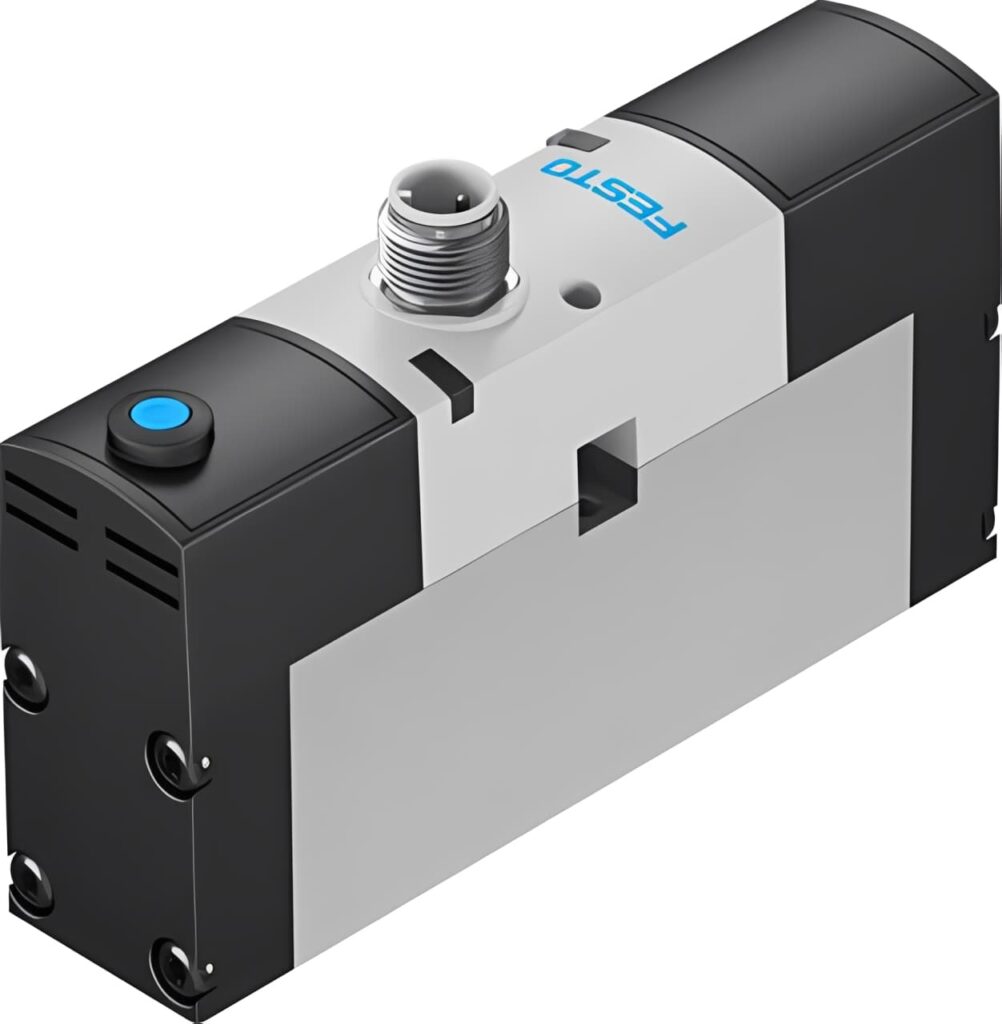
A Festo VSVA Monostable Valve provides electrically controlled directional airflow for automated pneumatic systems. When energised, it changes the air path; when the signal ends, it returns to its defined rest position through a mechanical or pneumatic spring arrangement.
The exact function depends on the complete VSVA part number, including its configuration, voltage, size, flow rating, pressure range, interface, and reset method.
What Makes the VSVA Monostable Design Different?
A monostable valve has one commanded switching state and one automatic return state. Unlike a bistable design, it does not remain in the last switched position after the electrical command disappears.
In a typical 5/2-way version, the valve controls two working ports connected to a double-acting actuator. It pressurises one side while exhausting the other, enabling controlled forward and return movement.
Engineers must confirm that the rest position supports the intended machine behaviour during power loss or stopping.
How Does Electrical Actuation Start Switching?
The control circuit sends the specified voltage to the solenoid assembly. Magnetic force operates the pilot stage, which shifts the main valve element and redirects compressed air through the selected ports.
Suitable Solenoid Valve Coils must match the valve design, voltage, power rating, and duty requirements. A similar-looking coil may not provide the correct fit or electrical performance.
Compatible DIN 43650 Solenoid Connectors can support secure power connection where the selected VSVA configuration uses the corresponding plug form.
Why Does the Rest Position Matter?
The rest position determines how the valve routes air when it is not energised. Depending on the configuration, this position may retract an actuator, extend it, or release pressure from one chamber.
Therefore, designers should review the pneumatic symbol rather than relying only on the words monostable or 5/2-way. The symbol shows the active paths in both positions and helps prevent incorrect port connections.
A defined return state does not automatically create a safety function. Trapped pressure, gravity, and external loads can still influence movement.
How Can Pressure Control Improve Performance?
Stable inlet pressure supports repeatable switching and consistent actuator force. Excessive pressure increases component stress and air consumption, while low pressure may cause slow or incomplete movement.
Appropriate Pneumatic Pressure Regulators help set controlled pressure close to a machine section or individual circuit. The regulator must provide enough flow for peak demand without excessive pressure drop.
Check pressure while the machine operates because static readings may hide flow restrictions.
How Can Reverse Flow Be Managed?
Some circuits need to prevent reverse airflow or preserve pressure in a selected branch. Correctly applied Pneumatic Non-Return Valves allow air to move in one direction while restricting it in the opposite direction.
These devices can complement a VSVA valve in holding or controlled-release arrangements. However, they change circuit behaviour, so designers must assess exhaust paths and trapped-pressure risks before installation.
How Do Sensors Support Valve Sequences?
The VSVA valve controls airflow, but the controller also needs confirmation that the actuator completed its movement. Pneumatic Cylinder Sensors detect piston position and return an electrical signal to the control system.
This feedback allows the PLC to start the next stage only after the actuator reaches the required position. It also helps identify delayed strokes, missed movement, or mechanical obstruction.
Sensor type, voltage, position, and cylinder compatibility must match the application.
Can Timing Devices Improve Pneumatic Control?
Certain operations require a controlled delay before airflow changes or the next process begins. Pneumatic Timers can introduce time-based behaviour where their operating principle suits the circuit.
A timer may support clamping, dwell, release, or sequencing tasks. Electronic PLC timing may offer greater programmability, so the best option depends on the control architecture and response requirements.
Why Include Manual Control?
Automated equipment still needs safe commissioning, testing, and maintenance procedures. Selected Pneumatic Manual Control Valves can provide local airflow control for suitable isolation or test functions.
Manual devices must not bypass safety controls or create unexpected actuator movement.
What Should Buyers Check Before Selection?
The VSVA family includes multiple configurations, so buyers should identify the exact operational requirements before ordering.
Important selection factors include:
- Valve function and pneumatic symbol
- Monostable reset method
- Operating voltage and electrical connection
- Valve size and mounting standard
- Working and pilot pressure range
- Nominal flow capacity
- Internal or external pilot supply
- Port arrangement and sub-base compatibility
- Manual override type
- Temperature and environmental rating
- Required approvals and protection level
The valve must also match actuator volume, cycle speed, tube dimensions, and simultaneous air demand. A suitable valve can still perform poorly when the surrounding circuit is undersized or contaminated.
How Should the Valve Be Installed and Maintained?
Install the valve according to its airflow markings and mounting requirements. Keep ports clean, use compatible seals, and prevent thread compound or debris from entering internal passages.
Before electrical connection, verify voltage, polarity, connector format, and protective measures. Restore air pressure gradually, then test every commanded and rest-state movement under controlled conditions.
Routine maintenance should include leak checks, connector inspection, pressure verification, and monitoring for slow or irregular switching. Always isolate electrical power and release stored pneumatic energy before service work.
Why Select the Correct Festo VSVA Monostable Valve?
The right Festo VSVA Monostable Valve combines electrical control with a predictable automatic return state. It can support repeatable actuator movement, compact machine design, and efficient integration with sensors, pressure controls, and sequencing devices.
Successful selection requires more than matching the product name. Engineers should confirm the complete function, voltage, flow, pressure, reset method, interface, and environmental requirements to build a dependable pneumatic control system.