
How Does the LOOPCHECK107 Socket Tester Improve Electrical Checks?
What Makes the LOOPCHECK107 Socket Tester More Than a Basic Indicator?
For rapid assessment of a UK mains outlet, the LOOPCHECK107 Socket Tester combines socket wiring, earth loop, mains polarity and 30 mA RCD checks in one compact instrument. Within the wider Loop & RCD Testers category, it provides maintenance professionals with a convenient first-line method for identifying conditions that require further investigation.
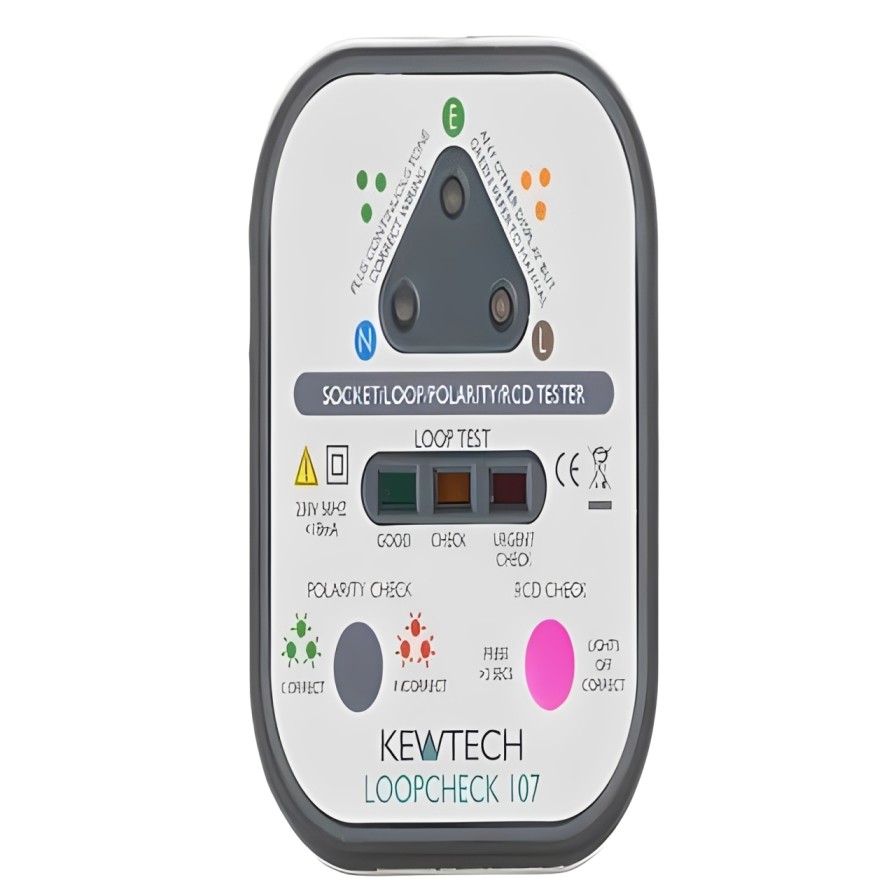
Manufactured by Kewtech Corporation, the LOOPCHECK107 Socket Tester is designed for 230 V UK socket outlets. It begins checking the outlet automatically when inserted, using bright LEDs and audible tones to communicate the result. Unlike a basic socket indicator that primarily checks conductor positions, this model also assesses the quality of the earth loop return path and checks mains polarity.
Which Functions Does the Tester Combine?
The LOOPCHECK107 Socket Tester brings four important checks into one handheld device:
- Automatic socket wiring and polarity indication
- Earth fault loop quality assessment
- Mains supply polarity verification
- Operational testing of 30 mA RCD protection
A satisfactory automatic wiring check is shown through green LEDs accompanied by a continuous audible tone. When a problem is detected, red or orange indicators and a changing warble tone help attract the user’s attention. The LEDs are arranged to represent the socket pins, making the indication easier to interpret.
The manufacturer’s technical information states that the instrument can identify a satisfactory condition plus 18 wiring fault conditions. However, any indication must be interpreted according to the operating instructions. A plug-in tester does not certify an installation or replace the full inspection and testing procedures required from a competent electrician.
How Does the Earth Loop Check Add Practical Value?
An earth conductor may be connected at the socket but still have an earth loop path with excessive impedance. A conventional socket tester may indicate that the earth terminal is present without assessing whether the complete return path is of suitable quality. The LOOPCHECK107 Socket Tester adds an earth loop screening function to address this limitation.
Its colour-coded loop indications are divided into three bands:
- Green indicates a loop result below 1.8 Ω
- Amber indicates a result from 1.8 Ω to 92 Ω
- Flashing red indicates a result above 93 Ω
These bands provide a fast condition-based indication rather than a detailed numerical loop impedance reading. An amber or flashing red result should prompt further assessment with an appropriate calibrated installation tester. A high value may occur on some TT earthing systems, so the displayed colour must be considered alongside the installation type rather than treated as a standalone pass or fail decision.
How Does It Check Mains Polarity?
The instrument includes a touch pad for verifying the polarity of the incoming mains supply. This matters because a standard plug-in tester can sometimes display apparently correct socket connections even when live and neutral have been reversed further upstream.
After obtaining an acceptable socket wiring indication, the operator follows the manufacturer’s procedure and touches the designated polarity pad. The LOOPCHECK107 Socket Tester then checks whether the incoming supply polarity is correct. Any unexpected indication requires professional investigation before the outlet is relied upon.
For work involving isolation or access to conductors, dedicated Voltage Indicator & Proving Unit Kits support the recognised prove-test-prove process. The socket tester must never be used as the sole instrument for proving that a circuit is dead.
What Does the 30 mA RCD Check Confirm?
The LOOPCHECK107 Socket Tester applies a measured 30 mA test current to check whether the RCD protecting the socket operates. This provides a convenient operational check for circuits protected by a 30 mA residual current device.
Before pressing the test button, the operator should identify equipment connected to the same circuit. An RCD trip will interrupt the supply, which may affect computers, machinery, alarms or other sensitive loads. People using the circuit should be informed before the test begins.
A successful trip confirms that the RCD responds to the tester’s applied current. It does not provide the detailed trip-time data, ramp testing or multi-current measurements needed for formal installation verification. If complete RCD performance data is required, a suitable calibrated instrument should be used by a competent person.
How Should an Unexpected Result Be Investigated?
An unexpected indication is a reason to stop and investigate, not an instruction to dismantle the socket while it remains energised. The outlet should be removed from service where necessary, and the result should be recorded for follow-up.
During structured fault finding, Non Contact Voltage & Magnetic Field Indicators can support preliminary live-voltage screening before more controlled testing begins. These indicators are useful for initial detection, but they must not replace a suitable two-pole voltage indicator and proving unit when confirming safe isolation.
Where the fault may relate to circuit loading or connected equipment, correctly rated Current Clamps can help assess conductor current without breaking the circuit. Appropriate Digital Multimeters can then support voltage, resistance or continuity measurements after the correct safety procedure has been established.
Where Can the LOOPCHECK107 Socket Tester Be Used?
The LOOPCHECK107 Socket Tester is suited to rapid outlet screening across residential, commercial and light-industrial environments. Typical users and applications include:
- Electricians completing initial site assessments
- Facilities teams checking workplace socket outlets
- Maintenance engineers investigating reported power problems
- Landlords arranging checks between occupancies
- Gas engineers assessing an outlet before connecting equipment
- Contractors performing pre-checks before detailed testing
- Technicians checking sockets after minor maintenance work
Its automatic operation, visual indicators and audible tones make it practical when numerous sockets require a preliminary check. Because it operates directly from the socket supply, it does not require batteries for its normal testing functions.
What Safety Precautions Should Be Followed?
The tester operates on an energised 230 V outlet, so it must be inspected before use. The casing and plug pins should be clean, dry and free from visible damage. It should not be used in wet conditions, on damaged accessories or outside its intended voltage and socket configuration.
Users must keep their fingers behind the appropriate barriers and follow the official operating instructions, particularly when using the mains polarity touch pad. If the instrument gives a fault indication, produces inconsistent results or appears damaged, testing should stop until the equipment and installation have been assessed.
The LOOPCHECK107 Socket Tester is best understood as an advanced screening instrument. It helps identify wiring, earthing, polarity and RCD concerns quickly, but it does not replace safe isolation, calibrated test equipment or professional electrical judgement.
Why Is the LOOPCHECK107 Socket Tester a Useful First-Line Tool?
By combining four essential checks in one portable design, the LOOPCHECK107 Socket Tester helps users move beyond a simple connected-or-not-connected indication. Its earth loop bands, mains polarity function, automatic socket check and 30 mA RCD test provide meaningful information at the beginning of an inspection.
Used within its limits, the device can accelerate preliminary assessments and highlight where more detailed testing is necessary. That makes it a valuable addition to the toolkit of professionals responsible for maintaining safe and dependable UK socket circuits.