

How Can Glycerine 99.5 % (Technical) Improve Industrial Batch Control?
What Makes Concentrated Technical Glycerine a Process-Control Material?
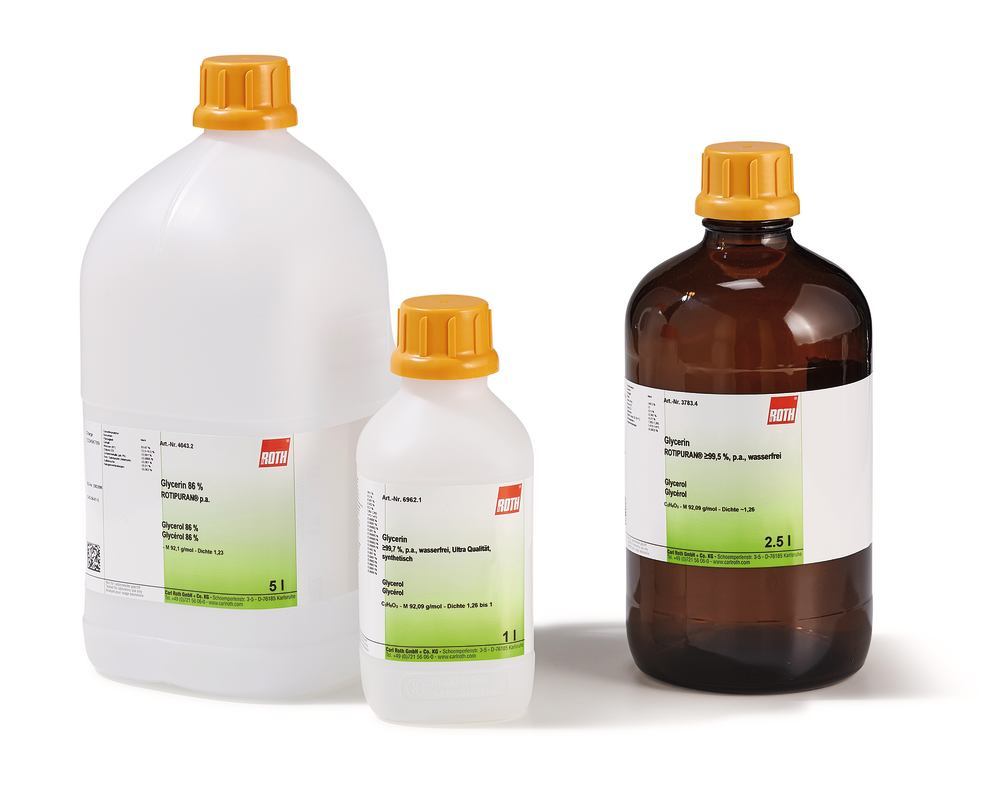
In repeatable manufacturing, Glycerine 99.5 % (technical) offers controlled glycerol content with low introduced water. This helps teams manage moisture, solids and ingredient ratios precisely. Also called 1,2,3-propanetriol, it has CAS number 56-81-5, formula C3H8O3 and molar mass 92.09 g/mol. The technical grade is intended for suitable industrial processes.
Glycerine is a clear, colourless, hygroscopic and highly viscous liquid under suitable conditions. Within broader Organics processing, it can function as a humectant, plasticiser, solvent, carrier, viscosity modifier or reactive intermediate. Its actual role depends on the surrounding chemistry, temperature, water balance and desired finished-material properties.
Why Does a 99.5 % Concentration Matter in Production?
Concentration determines how much glycerol and water enter a batch. A 99.5% grade provides a concentrated starting point for building a defined water balance. This benefits resins, coatings, adhesives and other systems where excess water changes curing, drying, clarity or mechanical performance.
Assay is not the entire specification. Products with the same minimum glycerol percentage may differ in colour, acidity, water, ash or trace impurities. Manufacturers should establish limits around process-critical parameters instead of approving material from concentration alone.
How Does Temperature Influence Glycerine Flow?
Viscosity changes strongly with temperature. As glycerine cools, it becomes difficult to pump, meter or mix and may crystallise near room temperature. A cold, slow-moving delivery does not necessarily indicate poor quality, but it can disrupt unloading and dosing accuracy.
Suitable Temperature and monitoring instruments help teams understand storage and process conditions before transfer begins. Any warming method must follow supplier guidance and site procedures. Excessive or uneven heating can affect containers, create hot spots and raise energy costs without solving an underlying equipment-design problem.
Which Industrial Processes Can Use Technical Glycerine?
Technical glycerine can support alkyd and polyester chemistry, resins, coatings, adhesives, textile treatments, paper processing, rubber compounds and selected cleaners. It may improve flexibility, retain moisture or distribute compatible ingredients. Its hydroxyl groups can also participate in reactions used to create glycerol derivatives.
It may also be evaluated in lubricants, process aids or heat-transfer formulations designed for glycerol. Testing remains essential because concentration does not define corrosion, low-temperature performance or materials compatibility. A successful laboratory blend may still require equipment changes during scale-up.
How Should Pilot Batches Be Scaled to Production?
Scale-up should preserve mass ratios, mixing energy and order of addition. Accurate Standard balances can support controlled weighing during development and quality work, while suitable Magnetic stirrers can assist small-batch compatibility trials. Production vessels require independently assessed agitation, heat transfer and dosing capacity.
Mass-based dosing is often more dependable than uncorrected volume measurement because density and flow vary with temperature. Volume-meter calibration and temperature assumptions should be documented. Slow addition into an established mixing pattern can reduce concentration gradients and improve uniformity.
Which Incoming Quality Checks Reduce Batch Variation?
Incoming control should verify identity, assay and water before application-specific parameters. Checks may include colour, density, refractive index, acidity or alkalinity, ash and trace impurities. The certificate must match the delivered lot, while process risk may justify confirmation testing.
Representative Sampling is particularly important for a viscous, hygroscopic liquid. Sampling tools should be clean, compatible and capable of reaching the defined sample location. Containers must be closed promptly after collection to reduce moisture uptake, while sample labels should preserve lot and container traceability.
Trend analysis adds value beyond pass-or-fail inspection. Recording water, colour, density and viscosity-related observations across deliveries can reveal gradual supplier or seasonal changes. Early detection gives manufacturing teams time to adjust qualification, investigate handling conditions or discuss specification drift before finished-product performance changes.
How Can Storage Design Protect the Material?
Store glycerine in tightly closed, compatible containers in a clean area with controlled operating conditions. Open vents, damaged seals or frequent container access can expose the hygroscopic material to atmospheric moisture. Contamination may also come from shared transfer lines, dirty couplings or incorrectly identified return material.
Tank and package design should support clean drainage, safe inspection and controlled transfer. Teams should consider the residual heel left in drums or intermediate bulk containers because unrecovered material affects yield and purchasing cost. Dedicated connections and documented line clearance reduce the chance of mixing technical glycerine with another grade or chemical.
What Safety Measures Support Responsible Handling?
The current safety data sheet should guide exposure controls, personal protective equipment, spill response and disposal. Suitable Protective Clothing should be selected through a task-specific assessment rather than by category name alone. Spilled glycerine creates a serious slip hazard, so affected areas require prompt containment and approved cleaning.
Technical material must remain clearly separated from food, pharmaceutical or personal-care production unless suitability has been formally established. Labels, transfer records and storage locations should make the grade unmistakable. Workers also need training on safe hose connection, container opening and response to leaks during unloading.
How Should Buyers Calculate the Real Procurement Cost?
Unit price is only one part of the delivered cost. Procurement teams should compare glycerol concentration, packaging, transport, unloading time, residual container losses, heating energy and waste handling. A lower purchase price may provide little benefit if cold-weather transfer is slow, packaging creates excessive residue or batch documentation is incomplete.
Before ordering, confirm assay, water limit, key impurities, pack size, shelf life, certificate availability and change-notification practices. Reliable supply and consistent specifications protect production schedules. By treating technical glycerine as a controlled process input rather than a generic liquid, manufacturers can improve batch repeatability, reduce avoidable losses and make better scale-up decisions.